
Eating ultra processed and artificially sweetened, high caloric drinks.
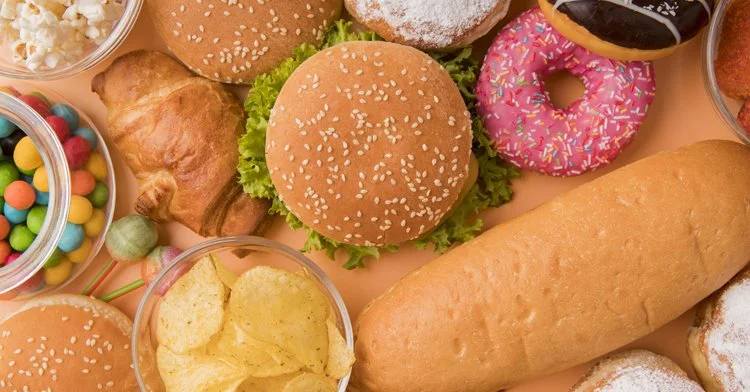
Do you remember the foods you used to eat as a kid? I do. I loved getting a giant cinnamon bun at the school canteen — especially on a cold winter's day. I loved going out with my parents for dinner at the local steakhouse and ordering a cheeseburger (before I became vegetarian) and a chocolate mousse for dessert. And as a treat on Friday nights, my dad would get fish and chips — deep fried fish in batter, chips drenched in vinegar — and we'd eat it on the couch watching Magnum PI, almost always followed by ice cream (Magnum’s of course). That's a pretty terrible diet by today's standards. But here's the thing — we all ate like that in the 80s. And we didn't have the obesity epidemic we have today?
HOW BAD IS IT?
Look at Australia. 32% of Australian Adults are obese. In the USA that number is 41%. Have you ever stopped to think why? It genuinely defies logic. So what happened? We have diet everything. Low carb, low fat, sugar free, calorie counted. We have 24-hour gyms on every corner. Exercise equipment collecting dust in our homes. Apps on our phones telling us exactly what to eat and when to move. And yet. In Australia obesity rates have doubled since 1995 and are still climbing. We are getting fatter every single year. How? Why? What is going on? I'll tell you what's going on. The food we eat today is not the food we grew up with. It looks similar. It comes in similar packaging. It uses similar names. But it has been fundamentally, chemically altered. Even our fast food is more unhealthy today than 30 years ago. Portion sizes have increased, nutritional value has declined, there are more add on’s and we are eating out way more frequently today than ever before. In summary, the products that have replaced our childhood food are doing something to our bodies that a Friday night fish and chip dinner simply never did. We are not eating more because we are weaker or lazier than our parents. We are eating more because the food has been engineered to make us eat more. And the drinks we consume every day are quietly adding hundreds of calories, destroying our gut health, and driving a metabolic crisis that is killing us slowly.
WHAT ARE WE TALKING ABOUT?
In this blog, we are talking about two of the worst habits for your health — eating ultra-processed food and drinking sugary, artificially sweetened, and highly caffeinated drinks. Two habits that are deeply connected and so I want to tackle them together in this short blog. Why Because these are two key stone habits you can start changing today.
I'm Cherine Chinnock founder of 4yourlife where we deep dive into habit science to improve the quality of your life. This is habit number 7 and 8 in my series on the top 10 worst habits for your health. Eating ultra processed food and drinking high calories highly caffeinated drinks. into it.
LETS DEFINE THE PROBLEM AREA.
Now before we get into it, let me start by defining what we are taking about specifically Because not all processed food is the problem. Food scientists use a classification system called NOVA, which categorises food into four groups based on how much industrial processing it has undergone. Todays discussion is focussed on group four : ultra-processed food. Ultra-processed foods are industrially manufactured products made mostly from substances extracted from foods — not food itself. They contain ingredients you would never find in a home kitchen. Emulsifiers, stabilisers, artificial colours, flavour enhancers, hydrogenated oils, high-fructose corn syrup, modified starches. They are designed to be hyper-palatable — engineered to hit the precise combination of salt, sugar, fat, and texture that keeps you eating past the point of fullness. And they are designed to be cheap, convenient, and have a shelf life that real food could never have. These products are designed in laboratories to bypasses your body's fullness signals and keeps you eating past the point of satisfaction. And it's not just the obvious stuff .
Let me give you some examples:
It’s in your Multigrain bread: Flip the packet, you'll find 20-plus ingredients when real bread needs four. It’s in flavoured yoghurt — more sugar than a chocolate bar. It's in the muesli bars in your children's lunchboxes — more sugar per 100 grams than a Tim Tam. It's in your pasta sauce, your breakfast cereal, your protein bar. What about the drinks? Sugary drinks are ultra-processed food in liquid form — and in some ways more dangerous, because liquid calories don't trigger the same fullness signals that solid food does. You can drink 500 calories and your brain barely registers it. A standard 600ml bottle of Coke contains 16 teaspoons of sugar. Sixteen. A large juice from a smoothie bar — often marketed as healthy — can contain as much sugar as two cans of soft drink, with the fibre stripped out and the blood sugar impact amplified.
So what about diet drinks – you may be thinking. Surely that’s ok? But here's where it gets more complicated. Many people have switched to diet drinks thinking they're making a healthier choice. The research is increasingly clear that this may not be the case. Artificial sweeteners — aspartame, sucralose, saccharin — do not contain calories, but they appear to disrupt the gut microbiome, alter insulin response, and may actually increase cravings for sweet food by training the brain to expect sweetness without the caloric reward.
And then there is caffeine. Coffee in moderate amounts — two to three cups per day — has genuine health benefits and I'm not here to take your coffee. But the highly caffeinated energy drinks that have become normalised — particularly among young people — are a serious concern. Many contain the equivalent of three to four espressos, combined with sugar or artificial sweeteners, artificial flavours, and stimulants. They spike cortisol, disrupt sleep, and create a dependency cycle that leaves people more fatigued than before they started drinking them.
WHAT THIS IS DOING TO YOU?
So why is eating Ultra processed foods so bad for you? A major study published in The BMJ in 2024 found that ultra-processed food is now linked to 32 separate health conditions. Thirty-two. Including heart disease, type 2 diabetes, obesity, depression, anxiety, certain cancers, and dementia. Here's the part that connects directly to my opening story. The fish and chips my family ate on a Friday night were cooked in animal fat, yes. The cinnamon bun was full of sugar, yes. The ice cream was full of cream and sugar, yes. But they were made from real ingredients. They didn't contain emulsifiers disrupting our gut lining. They didn't contain artificial colours linked to hyperactivity in children. They didn't contain nitrates classified by the WHO as carcinogens. They didn't contain flavour enhancers designed to override our satiety signals. Real food — even indulgent real food — behaves differently in the body than ultra-processed food.
The obesity epidemic didn't explode because we started eating fish and chips. It exploded because fish and chips was replaced by ultra-processed approximations of food — and sugary and artificially sweetened drinks became the standard accompaniment to every meal and snack. And here's what I really need you to hear as a parent: what you feed your children now is programming their gut microbiome, their taste preferences, their relationship with food, and their long-term health — for decades. The habits formed around food in childhood are among the most durable habits a person ever develops.
HERE’S HOW TO FIX IT!
So, how do we stop? You don't need to be perfect. You need to shift the ratio.
Here are a few tips:
1. Use the five-ingredient rule. Every time you pick up a packaged product, flip it over. More than five ingredients, especially ones you can't pronounce or wouldn't find in your kitchen? Put it back. This one habit, done consistently, will transform your shopping trolley.
2. Swap the drinks first. This is the highest-impact, lowest-effort change you can make. Replace one sugary or artificially sweetened drink per day with water or unsweetened herbal tea. Start there. Just one. Your palate will adjust faster than you think.
3. Crowd out, don't cut out. Don't focus on removing processed food. Focus on filling your plate with real food first — vegetables, fruit, protein, whole grains. When your meals are built around real food, the processed options naturally take up less space and less of your appetite.
4. Make real food the easy choice. Pre-cut vegetables. A visible fruit bowl. Boiled eggs in the fridge. Nuts and fruit portioned into containers. Make real food as quick and easy to grab-and-go as the processed alternative.
6. Start with the lunchbox. If you have children, this is your most important action. Check the ingredient list on everything you're currently packing. Find one swap this week. Just one. That's where generational change begins.
TODAYS ACTION.
Here's what I want you to take away from today. The fact that we're getting fatter and sicker in a world with more gyms, more diet products, and more health information than ever before is not a failure of willpower. It is not a personal failing. It is the entirely predictable outcome of a food system that has been optimised for profit, not health. But understanding that — really understanding it — is actually empowering. Because it means this is not about being stronger or more disciplined. It is about making different choices. Informed choices. It’s about re-engineerng your environment to make these choices easier.
WHY? Because we need to do better for ourselves and our children. You don't have to go back to the 1980s. You just have to go back to real food. If you are craving potato chips – grab the plain salt and vinegar, not the bright orange cheezels. Your body doesn’t know what to do with Flavour Enhancers (621, 635) and Food Acid (262).
So make a small start today, a little more tomorrow , a little more often, one meal at a time. The fish and chips on a Friday night? Go for it. Just check what oil it's cooked in and add a home made salad. Skip the Coke. Have water. And maybe — just maybe — make the ice cream yourself. That's how change works. Small. Deliberate. Consistent. Conscious. One habit at a time!