
Poor Sleep Hygiene
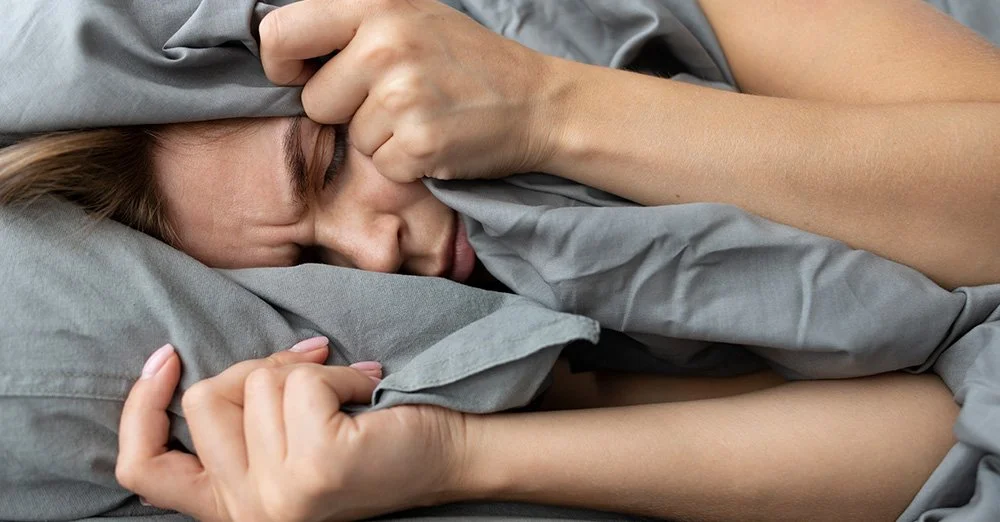
I had the best night sleep last night. I was deeply unconscious. I woke before my alarm. I feel refreshed and ready for the day! It felt great. In fact I can’t remember the last time I had such a perfect night sleep. And that’s that problem! When was the last time you woke up feeling genuinely rested?
Not functional. Not "I can get through the day." Actually rested — clear-headed, energised, ready. Like you had fully recharged overnight. For a lot of people, it's hard to remember. Maybe if you got a better night sleep you would be able to remember. That’s the irony.
There is actually a scientific explanation for that. Sleep scientists have discovered that while you sleep, your brain activates a cleaning system — called the glymphatic system — that literally flushes toxic waste products out of your brain.
One of the key substances it clears is amyloid beta — the same protein that builds up in the brains of people with Alzheimer's disease.
Here's the critical part: this cleaning process happens almost exclusively during deep sleep. If you're not getting enough deep, quality sleep, that waste accumulates. Night after night. Year after year.The research is now clear enough that sleep deprivation is considered one of the most significant modifiable risk factors for dementia and Alzheimer's disease. Because of the build-up of amyloid beta. Not a correlation. A risk factor. Like smoking is a risk factor for lung cancer. If that isn’t a reason to get your 8 hours, then I don’t know what is!
I'm Cherine Chinnock, and this is Habit #5 in the 10 Worst Habits for Your Health series. Today we're talking about poor sleep. What it's actually costing you — far beyond feeling tired — why so many of us are totally ok with not getting enough sleep and the exact habits that will transform the way you sleep. For good.
What do we mean by poor sleep?
Poor sleep is any pattern of sleep that leaves you chronically under-recovered. Poor sleep can occur for several reasons.
Not getting enough hours — adults need 7 to 9, not 5 or 6.
Poor quality sleep — waking frequently, not reaching deep sleep, feeling unrefreshed even after a full night.
Inconsistent sleep — wildly different bedtimes and wake times that confuse your body clock.
Sleep that is chemically disrupted — by alcohol, caffeine, medication, or screens.
And before anyone says "I function fine on 6 hours" — the research is unambiguous. The vast majority of people who believe they've adapted to short sleep have simply adapted to feeling suboptimal. They've normalised exhaustion.
So, what is sleep actually for? We think of sleep as the absence of activity. It is actually one of the most biologically active periods in your entire day.
While you sleep, your brain is not resting — it's working. Consolidating everything you learned during the day, moving information from short-term to long-term memory. This is why a good night's sleep after studying something new dramatically improves retention.
I can honestly say that this is 100% true. I play the piano and often I am hammering away at a difficulty piece and it’s just not sticking. I get a good night sleep and the next morning – I can just play it. Its staggering and also pretty cool
So, we know that sleep is linked to learning by way of consolidation and memory. But there are so many other benefits that you maybe don’t know about. Let’s start with the most important one. The dementia connection. YES. You heard me. DIMMENSIA AND ALZEIMERS TOO! To be more direct here - If you are over 50 and you sleep less than 6 hours a day you are at a 30% higher risk of developing dementia later in life. Thirty percent. From a habit that is entirely changeable.
On a side note – facts like these are exactly why I started 4yourlife as a platform to bring this and other important life changing information directly to you!
So, sleep prevents build up a brain plaque. That’s 1 huge benefit. The other link I want you to know about it’s the link to weight management.
Most of us think weight management is a two-part equation — diet and exercise. But sleep is a critical third pillar that is almost universally overlooked.
When you don’t get enough sleep, ghrelin—the hormone that stimulates hunger—increases, while leptin—the hormone that signals fullness—decreases. As a result, you feel hungrier, less satisfied after eating, and more likely to crave high-calorie, high-fat, high-sugar foods. Sleep deprivation also impairs the prefrontal cortex, which is responsible for impulse control and decision-making. Research shows that sleep-deprived people consume an average of 385 extra calories a day—roughly the equivalent of an extra meal. On top of that, chronically elevated cortisol caused by poor sleep can contribute to increased fat storage.
That’s connection #2. #3 Sleep and mental health.
Have you ever noticed how everything feels harder after a bad night? The small things feel bigger. The irritations feel more personal. That's not just tiredness — that's neurobiology. Even one night of poor sleep makes your amygdala — the brain's threat-detection centre — up to 60% more reactive. You are more easily triggered, more likely to overreact, less able to regulate your emotions.
Connection Number 4; Sleep and physical recovery. Sleep is when your body repairs. Your body’s growth hormone releases primarily during deep sleep. Muscles start to repair and strengthen. If you're exercising hard and sleeping poorly, you're undermining every session.
So that’s pretty compelling – but what’s happened to our sleep hygiene over the years?
Our modern world has systematically dismantled the conditions that the human sleep system evolved for. For hundreds of thousands of years, humans slept in sync with the natural light cycle. Sun goes down, darkness arrives, melatonin releases, sleep follows. Simple. Biological. Automatic. Then we invented artificial light. The blue-spectrum light from our phones, tablets, laptops, and TVs directly suppresses melatonin production. Your brain cannot distinguish between screen blue light and sunlight. When you're scrolling at 10pm, your brain thinks it's midday. Melatonin is delayed. You don't feel tired when you should. You go to bed later.
Lets also not over look the our culture. The glorification of busyness. Sleep framed as laziness. " Image this scenario. I get to work in the morning and say – geez I was up all night, Only managed to get 3 hours. Buy hey I’m fine. Lets get to work. Where would you like this high rise scaffolding set up? Or – worse What time am I due to perform that complicated brain surgery? I’ll pick the kids up tonight after their late night basketball game! Its irresponsible and dangerous.
Ok – I think I’ve made the point ! How do we fix this – QUICKLY. Now Not next week. Right NOW. And I’ve got good news because sleep responds quickly to the right behaviours. Here are 12 evidence-based habits that I want to ,leave you with will transform your sleep. Before I get into this, please make a mental note to watch my podcast with Chris Bunny sleep Scientist from Home sleep. You can find it on my website or on spotify: 4yourlife.com.au
Here you are 12 sleep saver tips. I’ll rattle them off quickly – but if you want to find out more, please visit my blog page at 4yourlife.com.au. I’ll leave a link below.
Fix your wake time first.
Get morning light within 30 minutes of waking.
Create a wind-down routine.
Cool, dark, quiet bedroom. Around 18°C. Blackout curtains. Phone charged outside the room.
Caffeine cut-off at 1–2pm.
Understand alcohol. It sedates — it doesn't restore.
Brain dump before bed.
Protect total sleep time. 7–9 hours is not a luxury.
Finish eating 2–3 hours before bed.
Time your exercise right. Not within 2–3 hours of bedtime.
If you feel that you need a nap short and early. 20–30 minutes max, before 3pm.
Don't lie in bed awake. If you can't sleep after 20 minutes, get up.
In closing let me be DRAMATIC and EMPHATIC. Sleep is the number 1 most important habit 4yourlife! Not just for YOU but for your family, your children. You need to make this a priority. And also set the example for those around you that you care about.
Sleep is not passive. It is not dead time. It is not a luxury for people who don't have enough to do. It is the foundation of every other area of your health — your weight, your mental health, your cognitive function, your physical recovery, and your long-term brain health
What's your biggest sleep challenge? Drop in the comments Falling asleep? Staying asleep? Can't switch your brain off? Tell me. Lets fix it with HABIT SCIENCE!